Author: Alan Bullock
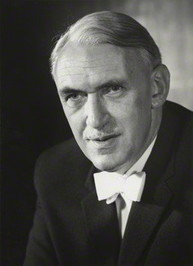
Dr. Bullock, later Sir Alan and eventually a life peer, diagnosed the malignancies of dictatorship and tyranny that plagued 20th-century Europe. He twinned two such dictators in one of his later studies, ''Hitler and Stalin, Parallel Lives'' (1991, Knopf).
He was the last of three brilliant Oxford historians whose views influenced thought in the English-speaking world and beyond, even when their own views diverged. The others were A. J. P. Taylor and Hugh Trevor-Roper who, for instance, offered a more nuanced interpretation of Hitler than did Dr. Bullock.
While Dr. Bullock originally portrayed Hitler as a diabolical charlatan and cynical opportunist without convictions, Trevor-Roper saw him as an ideologue and demagogue convinced of his own political philosophy. It was a distinction crucial to the understanding of Hitler's initial successes as a politician, statesman and military strategist, and Dr. Bullock reflected it in his double study of Hitler and Stalin.
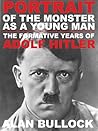
Nonetheless, his seminal Hitler book of 1952, published a mere seven years after Hitler's end, remained a scholarly classic and stayed in print, in one form or another, for more than half a century.
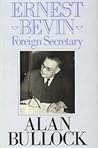
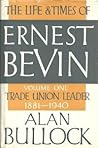
Dr. Bullock also compiled a three-volume biography of a Labor leader and former foreign secretary who helped shape postwar Britain, ''The Life and Times of Ernest Bevin.'' It took from 1960 to 1983 to complete.
He wrote or edited several other notable books on 20th-century European history, which also appeared in other languages.
Alan Louis Charles Bullock was born in Trowbridge, Wiltshire, the son of a gardener turned Unitarian preacher. He went to Oxford on a scholarship to study literature and modern history, which became his career, though he earned a doctor of literature degree in 1969.
Severe asthma ruled out military service in World War II; instead he spent it working for the European Service of the BBC as a political and diplomatic correspondent. After the war, he returned to Oxford.
Concentrating on the Third Reich of Hitler, he pored over the minutes of the Nuremberg trials. At the suggestion of the scholar A. L. Rowse, at Oxford, and the publisher Odhams, he produced the first comprehensive life of Hitler.
He also became increasingly active in academic affairs as dean and tutor of New College at Oxford. In 1960 he helped establish St. Catherine's, the university's first new college for graduate and undergraduate students in the 20th century.
He was vice chancellor of Oxford from 1969 to 1973. Over the years his outside interests included the chairmanship of the Tate Gallery (1973-1980). He was a former director of The Observer, joined the Social Democratic Party in 1981 and continued to lecture until 1997.
Dr. Bullock was knighted in 1972. Four years later, the Labor government of Harold Wilson made him a life peer; he took the title Baron Bullock of Leafield in the County of Oxfordshire.
In Library
More by Alan Bullock