Author: Eugenio Trías
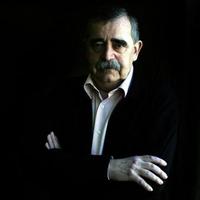
Trias was born in Barcelona. After obtaining his bachelor's degree in Philosophy at the University of Barcelona in 1964, he continued his studies in Pamplona, Madrid, Bonn and Cologne. Since 1965 he was Assistant Professor and, later, Associate Professor of Philosophy at the University of Barcelona (UB) and the Universitat Autònoma of Barcelona (UAB). In 1972 he stayed, for one year, in Brazil and Argentina, where he offered several courses and lectures. In 1976 he became Assistant Professor of Aesthetics and Composition at the School of Architecture of Barcelona. In 1986 he gained the Chair of Philosophy at this University, where he remained until 1992. In 1992 he became Chair Professor of Philosophy at the Pompeu Fabra University in Barcelona, where he remained as a Professor of History of Ideas until his death, aged 70, in his home city.
He has an encyclopedical conception of philosophy and has spread his ideas in very diverse fields such as ethics, politics, aesthetics, philosophy of religion, philosophy of history, theory of knowledge, and ontology. He has dealt with almost every field where philosophy can be applied. His preferred fields, nevertheless, have been, above all, Philosophy of Arts and Aesthetics, on the one hand, and Philosophy of Religion, on the other. He has always tried to derive his whole thought from his own personal conception of ontology, which is usually called the “Philosophy of Limit”. Many of his books have already become obligatory references in the Spanish written philosophical heritage of the last 60 years. Some of his works such as Treaty on Passion, Beauty and the Sinister, The World's limits or The Age of the Spirit have become classics of the Spanish written philosophical thought of the 20th century.
His work is regarded by the critics as one of two most significant philosophical pillars of the contemporary Spanish thought. Critics have praised his work for his particular style of writing (in which the philosophical thought gets "poetic antennas" with a great literary value). His works have been regarded not only a very important contribution to the Spanish philosophical and cultural heritage, but also an enormous textual production that will remain as one of the most reliable milestones of his generation in the fields of the philosophical literature and of the knowledge-oriented writing.
In Library
More by Eugenio Trías