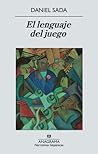
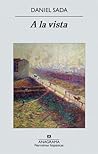
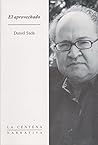
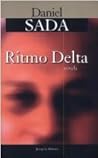
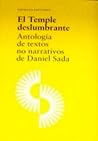
Author: Daniel Sada

Daniel Sada was a Mexican poet journalist and author whose work has being hailed as one of the most important contrubutions to the Spanish language.
He was a master of language and one of Mexico's most unique literary voices. His work is characterized by its dense, rhythmic prose and an inventive use of language that pushes the boundaries of traditional narrative forms. Sada's novels and short stories often explore the lives of ordinary people in rural Mexico, but he does so in a way that is anything but ordinary. His writing is filled with linguistic experimentation, blending formal and colloquial speech in ways that are both challenging and deeply rewarding.
One of Sada's most acclaimed works, *Almost Never* (*Casi Nunca*), is a testament to his distinctive style. The novel, set in post-revolutionary Mexico, follows the life of a man torn between duty and desire. Sada's use of language here is mesmerizing; his sentences twist and turn, mirroring the protagonist's inner turmoil. The narrative is both richly detailed and relentlessly paced, making for a reading experience that is as intense as it is immersive.
Another remarkable aspect of Sada's work is his ability to capture the rhythms and cadences of rural Mexican life. His characters speak in a language that feels authentic and true to their world, yet Sada elevates this speech to a poetic level. This is particularly evident in his short story collections, where he paints vivid portraits of life in the Mexican hinterlands with an economy of words that is truly remarkable.
Despite his considerable talent, Sada remains a somewhat underappreciated figure outside of Latin America. His work demands a level of attention and engagement that can be daunting, but for those willing to dive into his complex prose, the rewards are immense. Sada's contribution to Mexican literature is undeniable, and his works continue to influence contemporary writers. He is a literary figure whose work deserves greater recognition, both in Mexico and beyond.
In Library
More by Daniel Sada