Author: Remedios Varo
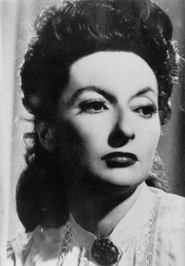
Remedios Varo Uranga (December 16, 1908 - October 8, 1963) was a Spanish-Mexican, para-surrealist painter and anarchist. She was born María de los Remedios Varo Uranga in Anglès, Girona, Spain in 1908. During the Spanish Civil War she fled to Paris where she was greatly influenced by the surrealist movement. She met her second husband (the first was Gerardo Lizarraga, a painter), the French surrealist poet Benjamin Péret in Barcelona. There she was a member of the art group Logicophobiste. They were introduced through a mutual friendship with the Surrealist artist Oscar Dominguez.
In 1937, she moved to Paris with Péret, sealing herself from any return to Franco's Spain since she had republican ties. She was forced into exile from Paris during the Nazi occupation of France and moved to Mexico City at the end of 1941. She initially considered Mexico a temporary haven, but would remain in Latin America for the rest of her life.
In Mexico, she met native artists such as Frida Kahlo and Diego Rivera, but her strongest ties were to other exiles and expatriates, notably the English painter Leonora Carrington and the French pilot and adventurer, Jean Nicolle. Her third, and last, marriage was to Walter Gruen, an Austrian who had endured concentration camps before escaping Europe. Gruen believed fiercely in Varo, and he gave her the support that allowed her to fully concentrate on her painting.
After 1949 Varo developed her mature style, which remains beautifully enigmatic and instantly recognizable. She often worked in oil on masonite panels she prepared herself. Although her colors have the blended resonance of the oil medium, her brushwork often involved many fine strokes of paint laid closely together - a technique more reminiscent of egg tempera. She died at the height of her career from a heart-attack in Mexico City in 1963.
Her work continues to achieve successful retrospectives at major sites in Mexico and the United States.
In Library
More by Remedios Varo