Author: Edmund Wilson

Librarian Note: There is more than one author by this name in the Goodreads database. See also physicist Edmund Wilson.
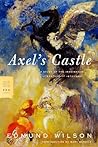
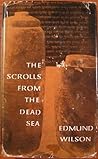
Edmund Wilson Jr. was a towering figure in 20th-century American literary criticism, known for his expansive intellect, stylistic clarity, and commitment to serious literary and political engagement. Over a prolific career, Wilson wrote for Vanity Fair, The New Republic, The New Yorker, and The New York Review of Books, shaping the critical conversation on literature, politics, and culture. His major critical works—such as Axel's Castle and Patriotic Gore—combined literary analysis with historical insight, and he ventured boldly into subjects typically reserved for academic specialists, including the Dead Sea Scrolls, Native American cultures, and the American Civil War.
Wilson was also the author of fiction, memoirs, and plays, though his influence rested most strongly on his literary essays and political writing. He was instrumental in promoting the reputations of F. Scott Fitzgerald, Ernest Hemingway, William Faulkner, Vladimir Nabokov, and many others. Despite his friendships with several of these authors, his criticism could be unflinching, even scathing—as seen in his public dismissal of H. P. Lovecraft and J. R. R. Tolkien. His combative literary style often drew attention, and his exacting standards for writing, along with his distaste for popular or commercial literature, placed him in a tradition of high-minded literary seriousness.
Beyond the realm of letters, Wilson was politically active, aligning himself at times with socialist ideals and vocally opposing Cold War policies and the Vietnam War. His principled refusal to pay income tax in protest of U.S. militarization led to a legal battle and a widely read protest book.
Wilson was married four times and had several significant personal and intellectual relationships, including with Fitzgerald and Nabokov. He also advocated for the preservation and celebration of American literary heritage, a vision realized in the creation of the Library of America after his death. For his contributions to American letters, Wilson received multiple honors, including the Presidential Medal of Freedom. His legacy endures through his extensive body of work, which remains a touchstone for literary scholars and general readers alike.
In Library
More by Edmund Wilson